Understanding how mortgage rates impact home sellers starts with a simple observation: you do not sell a house to a number on a rate sheet, you sell it to a person who has to fit a monthly payment into a monthly budget, and the rate is one of the biggest dials that sets that payment.
Rates make headlines every week, and sellers tend to hear them as either a threat or a promise, so the question of how mortgage rates impact home sellers gets answered with slogans far more often than with evidence. One voice says nobody can buy anything when rates rise. Another says a small dip will bring buyers flooding back.
Neither claim about how mortgage rates impact home sellers is wrong in spirit, but both are too blunt to price a house with. The honest picture is messier: rates change what buyers can afford, how long they shop, how hard they negotiate and what they ask you to pay for, and then your local market, your price point and your own house decide how much of that actually reaches your sale.
This article treats how mortgage rates impact home sellers as a decision problem rather than a forecast. We will look at the payment arithmetic buyers face, what evidence is worth trusting, how to avoid reading false precision into a handful of data points, and how to turn all of that into choices about price, terms and timing.
We will also spend real time on the part many sellers forget: if you are buying again, the same rate environment applies to you on the other side of the table. Nobody here can tell you where rates are heading, and we will not pretend to.
If you want the wider seasonal and cyclical context first, our cornerstone guide on the best time to sell a house is a good companion. All example figures below are round, clearly labelled illustrations, not quotes or predictions.
Key takeaways
- Buyers shop by payment, not by rate. A rate change moves the monthly cost of the same loan, and that payment is what limits what a buyer can offer on your house.
- Rates are one input, not a verdict. However mortgage rates impact home sellers nationally, local supply, your price point, your condition and your timing can swamp or soften what a rate move does in your neighborhood.
- Use dated, local evidence. National rate headlines give context; your own market’s showings, offers and pending sales tell you what is happening to your listing.
- Concessions are a pricing tool. Credits toward a buyer’s costs can sometimes help a payment problem more than a list-price cut, but they have costs, limits and lender rules to check.
- Your next purchase is affected too. A seller who is also a buyer faces today’s rates on the new loan and may be giving up an older, lower rate, so the whole move should be priced together.
- Verify before you act. Any claim about how mortgage rates impact home sellers should be checked against a local agent’s comparable data, a lender’s current quote and a tax or legal professional’s view cover what an article cannot.
How mortgage rates impact home sellers: the buyer payment behind your price
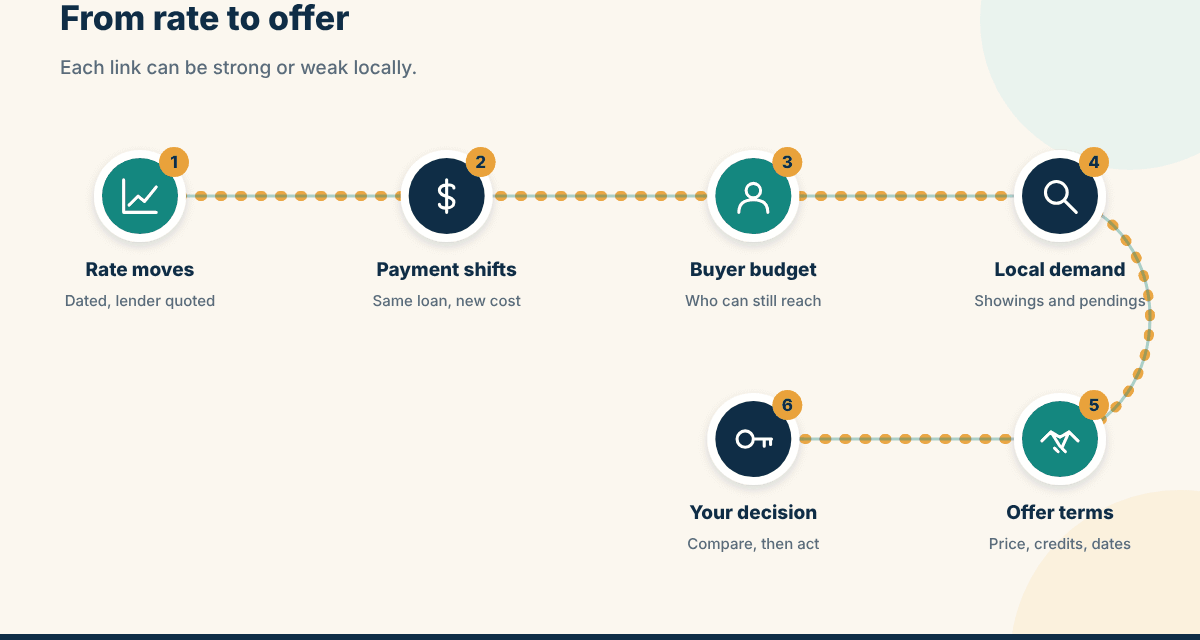
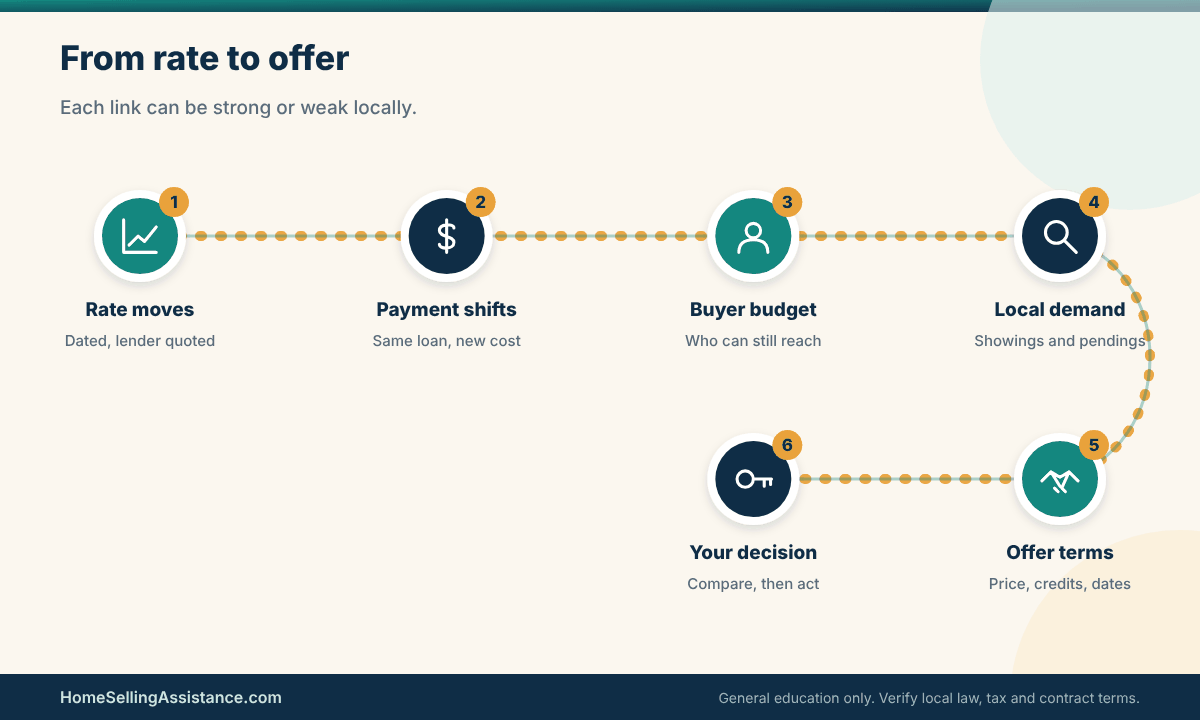
Before any strategy, it helps to be precise about the mechanism. When people say mortgage rates impact home sellers, the chain usually runs like this: the rate changes the monthly payment on a given loan amount, the payment changes what a buyer can qualify for or feels comfortable spending, and that shifts how many buyers can reach your price and how firmly they bargain once they do.
Each link in that chain can be strong or weak depending on where you live and what you are selling. We will take the links one at a time, beginning with the payment itself, because it is the part you can calculate on a napkin.
It also helps to remember that the way mortgage rates impact home sellers is not one event but a slow drip. A buyer who started shopping at one rate may be pre-approved at another by the time they find your house, and your listing meets a mix of buyers who each saw the market at a different moment. That is part of why two sellers on the same street can describe the same month so differently.
The monthly payment is the number buyers feel
Most buyers do not think in rates. They think in a number they can live with every month, plus a cash amount they can bring on closing day. A lender then checks that the payment, together with taxes, insurance and other debts, fits within the lender’s own limits. The interest rate sits inside that calculation, and because a mortgage is repaid over decades, a seemingly small rate difference compounds into a noticeable payment difference.
For a seller, that has two practical consequences, and both shape how mortgage rates impact home sellers at different price points. First, the buyers most sensitive to rate changes are usually the ones stretching to reach your price, such as first-time buyers or anyone buying near the top of their approval. Second, buyers with large down payments, equity from a previous sale or cash are less sensitive, which is one reason a rate move can feel dramatic in one price range and barely register in another.
Evidence to gather: a payment illustration with round numbers
Here is a plain illustration, using made-up round figures only. Imagine a buyer borrowing $300,000 on a 30-year fixed loan. At a 6 percent rate, the principal-and-interest payment lands at roughly $1,800 a month. At 7 percent, the same loan costs roughly $2,000 a month. That is a difference of about $200 every month, or around $2,400 a year, for exactly the same house and the same loan size.
Notice what the illustration leaves out. Property taxes, homeowners insurance, mortgage insurance and any HOA dues sit on top of principal and interest, and they do not move when the rate does. So the share of a buyer’s budget consumed by the payment is even more sensitive than the bare interest figure suggests. You can build a similar illustration for your own price range in a few minutes with any online mortgage calculator.
A useful way to use this is to run it backward. Take a monthly budget a typical buyer in your price range might have, and ask what loan size that budget supports at two different rates. The gap between those loan sizes is the extra purchasing power, or lost purchasing power, the rate change represents. It is a rough reasoning tool, not a prediction, and a lender can give any particular buyer real numbers.
Sellers sometimes ask how much a given rate change should matter to their sale. There is no honest single answer, because how mortgage rates impact home sellers differs by price band, by loan type and by the share of buyers who depend on borrowing. What you can do is measure your own exposure: ask how many recent buyers in your area used a mortgage, how large their down payments tended to be, and how close their payments sat to lender limits.
A scenario, an exception, and your next step: the buyer who stretches
Picture two buyers viewing your house on the same weekend. The first is purchasing with a modest down payment and is already close to the top of what a lender will approve. The second is moving from another state with substantial equity and will borrow a small fraction of the price. When rates rise, the first buyer may drop out or ask for help; the second barely notices.
The exception is the reverse case too. If rates fall, the stretching buyer may suddenly qualify, but a flood of such buyers can also compete among themselves, which sometimes shows up as multiple offers on well-priced homes. Your next step is to ask your agent or look at your local listing data to see who has actually been touring homes like yours: first-time buyers, move-up buyers or equity-rich relocators. That mix tells you how exposed your price point is.
Fair housing rules apply here, so keep the question about financing and price band, never about who a buyer is. Describing demand by payment sensitivity and loan type is a neutral way to understand how mortgage rates impact home sellers in your range. The HUD fair housing resources explain what sellers and agents should avoid when talking about buyers.
What data would support a rate-driven claim
If someone tells you rates are the reason your house is not selling, or the reason it will sell quickly, the claim should come with evidence you can look at. A rate headline alone is not evidence about your listing. Good support combines a dated rate source, local market activity and a specific explanation of how the two connect to your property type and price range.
Think of it as three layers, and apply them whenever someone explains how mortgage rates impact home sellers. The first layer is the rate itself, with a date. The second is local buyer activity, such as showing traffic, new pending contracts and listing counts. The third is the outcome for homes comparable to yours. When all three point the same direction, the rate story is plausible. When the layers disagree, something else is probably going on.
Evidence to gather: dated rate sources and local activity
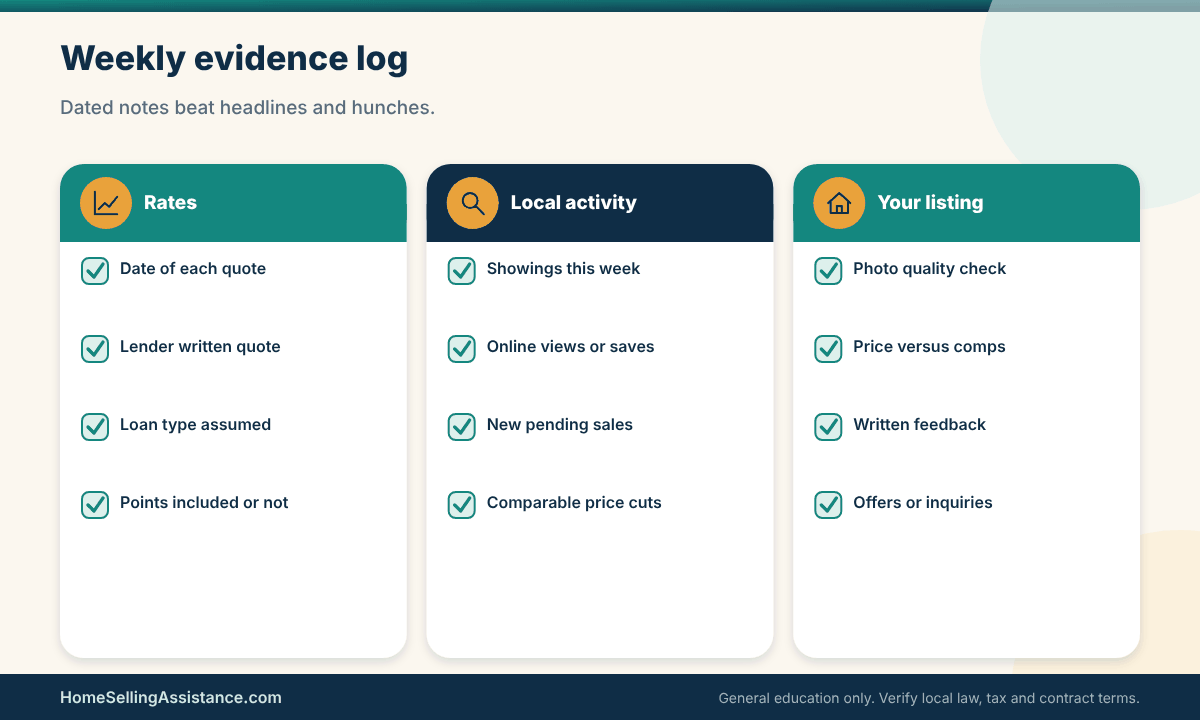
For rate context, use sources that publish with a date and explain their method, such as the weekly survey published by a government-sponsored mortgage company, data summarized by the Consumer Financial Protection Bureau in its consumer tools, or a lender’s own written rate quote for a specific loan. Write down the date next to any figure you cite. A rate from two months ago is history, not information about this week.
When you talk to a lender, ask for the quote in writing and ask what assumptions sit behind it, such as credit profile, down payment and whether points are included. Two quotes that look different may simply describe different borrowers. Comparing them honestly is part of understanding how mortgage rates impact home sellers, because the rate your buyer actually receives is not always the rate in the headline.
For local activity, the most useful pieces are items an MLS-connected agent can pull: how many comparable homes are active, how many went under contract recently, how long they took and how many had price changes. National association reports, such as those from the National Association of Realtors, add context, but they describe the country, not your street. Ask for a short written summary so you can compare it with your own observations.
A scenario and next step: reading a thin week of data
Suppose rates dropped noticeably last week and you got three extra showings this weekend. It is tempting to call that a turning point. But three showings is a small number, and one popular open house, nicer weather or a fresh price change can produce the same bump. A single week rarely tells you much about a trend.
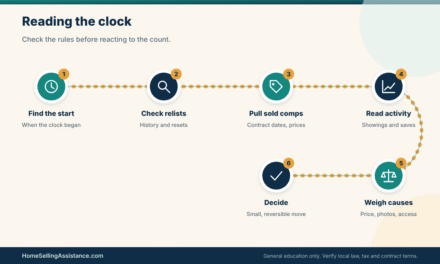
A steadier approach is to wait for a few weeks of pattern while you keep the house show-ready, and to track the same measures each week: showings, online views if your listing platform shows them, written feedback and offers. If a pattern emerges, your decision gets easier. If it does not, you have avoided changing price or terms based on noise.
A simple weekly log is enough. Note the date, the number of showings, any written feedback, the number of online saves or views if available and whether any offers or inquiries arrived. After three or four weeks, read the log as a whole. Evidence about how mortgage rates impact home sellers becomes much more believable when it comes from your own listing and lines up with what neighboring listings are experiencing.
With the mechanism and the evidence sources in hand, the next table puts the most common rate-related claims side by side with what supports them and where they fall short. Use it as a quick filter the next time a headline, a neighbor or an online forum tells you what rates mean for your sale.
| Claim you hear | Metric or source | What it supports | Limitation | Seller implication |
|---|---|---|---|---|
| Higher rates shrink the buyer pool | Payment math; lender quotes | Fewer buyers reach top-of-budget prices | Cash and equity-rich buyers are less affected | Check who buys at your price point |
| Rates fell, so demand is back | Local showings and pendings, dated | Possible early interest if several weeks align | One weekend is not a trend | Track weekly before changing price |
| Nobody can get a loan now | Lender pre-approvals; accepted offers | Some buyers are priced out or paused | Many buyers still qualify and close | Ask for pre-approval letters, not opinions |
| You must cut price when rates rise | Comparable sold and pending homes | Pricing pressure where comps show it | Concessions or terms may fix a payment problem | Compare a price cut to a credit |
| Rates will drop soon, so wait | No reliable source predicts this | Nothing firm | Forecasts are frequently wrong | Plan around your own timeline |
| Old low rates trap owners | Your own loan statement | Real cost of replacing a low rate | Depends on your next home and budget | Price the full move, not just the sale |
To use the matrix, pick the claim that matches what you are hearing, then read across to see what evidence would actually back it. If you cannot produce that evidence for your own market, treat the claim as an opinion rather than a fact. The last column is the habit to build: every rate claim should lead to a concrete thing you can check or a specific decision you can compare, not a general feeling of dread or optimism.
Separating signal from false precision when rates move
Markets reward humility. Sellers are often handed confident statements such as “every quarter point costs you a specific percentage of your price,” and those sentences sound scientific right up until you try to find the source. The reality is that rate effects are real but uneven, and they arrive mixed with a dozen other forces. Learning to sort signal from noise is the single most protective skill you can bring to a rate-driven market, and it is the core of understanding how mortgage rates impact home sellers without overreacting.
This section looks at two questions. What can rate-related evidence honestly tell you, and what local or property-specific factors can blur the picture? Both are about knowing how far a piece of evidence reaches before it stops being useful.
One reason this matters is that rate news travels faster than local data. A change appears in the news within a day, while the effect on contracts in your zip code may take weeks to show. Judging how mortgage rates impact home sellers in your specific market means being patient enough to wait for the slower evidence while staying ready to act when it arrives.
What evidence about how mortgage rates impact home sellers can honestly show
Good evidence about rates usually shows direction and rough magnitude, not exact outcomes. It can tell you that a payment on a typical loan went up or down, that more or fewer buyers are touring, or that homes like yours are taking longer or shorter to reach a contract. It rarely tells you what one specific buyer will offer on your specific house next Saturday.
That distinction matters because false precision is the most common way sellers get misled. A claim with a decimal point attached feels trustworthy, yet the decimal may be invented, borrowed from a different market or averaged over a period that no longer applies. When you see a precise percentage tied to a rate move, ask where it came from, what period it covers and which geography it describes.
Evidence to gather: before-and-after comparisons that hold up
The best test of whether mortgage rates impact home sellers in your market is a before-and-after comparison of similar homes. Pull a set of comparable homes that went under contract in the period before a rate change and another set after, keeping price range, size, condition and neighborhood as similar as you can. Then look at time to contract, how often price changed and how often sellers gave credits.
Be strict about similarity. Comparing a renovated listing in a sought-after school zone with a dated one elsewhere will tell you about the houses, not the rates. Ask your agent for a written comparison, or build your own from public listing sites, and mark each home’s price, days on market and any notes on concessions. Even a modest sample, if it is truly comparable, is more informative than a national headline.
When you review the comparison, look for patterns in terms as well as prices. Did sellers pay for the buyer’s closing costs more often after rates moved? Did closing dates become more flexible? Did contingencies get shorter or longer? These softer signals often show how mortgage rates impact home sellers earlier than the price line does, because sellers adjust terms before they adjust the sign in the yard.
Also check how many homes sit in each group. If you only have a handful, say so out loud and treat the finding as a hint rather than a conclusion. A small sample can still be useful for deciding how cautious to be, but it cannot justify a dramatic move such as a large price drop by itself.
A scenario, an exception, and your next step: the quiet price band
Imagine your neighbors on one side sold in a few days last spring, and your cousin’s house in a similar price band across town sat for weeks. The temptation is to blame rates for one and credit rates for the other. But the quick sale might have been priced a little under the market, or might have been the only renovated home available, while the slow one was overpriced for its condition.
The exception to watch for is a price band where buyer financing really dominates, such as a range where most purchases rely on a small down payment. In that band, a payment change can be the main story. Your next step is to ask which financing types were used in recent comparable sales. An agent or title company can often describe the general mix without giving private details.
If the answer shows mostly cash and large-down-payment purchases, then mortgage rates impact home sellers in your band far less than the headlines suggest, and a pricing problem is more likely to be about condition or comparables. If the answer shows mostly small-down-payment loans, take rate moves more seriously and be ready to discuss credits or flexible terms with buyers.
Local and property-specific confounders that muddy the rate story
A confounder is anything else that could explain what you are seeing. In housing, confounders are everywhere: how many homes are for sale, what season it is, whether a big employer just opened or closed nearby, how your house looks online, what your street’s traffic is like and whether a similar home just dropped its price two blocks away. Any of these can move buyer behavior as much as a rate change does.
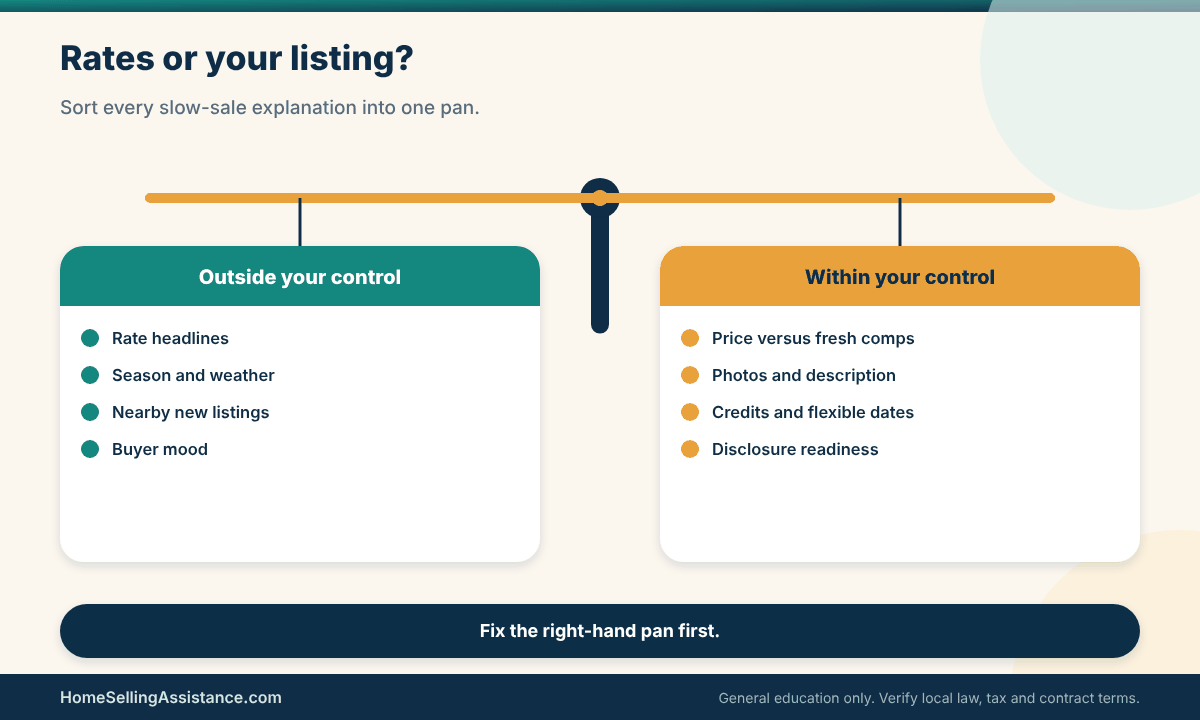
The practical lesson is not to ignore rates, but to refuse to give rates all the credit or blame; mortgage rates impact home sellers, yet they rarely act alone. A seller who blames rates for a quiet listing may skip over a poor first photo, a weak description or a price set above recent comparable sales. Fixing those items is within your control, while rates are not.
Evidence to gather: a short confounder checklist for your listing
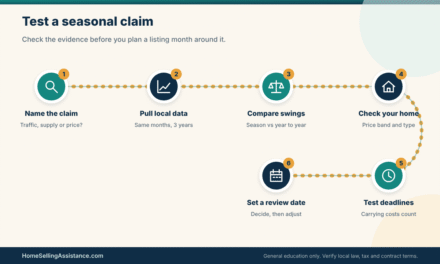
Start with supply, because it changes how strongly mortgage rates impact home sellers in your band. Count how many similar homes are active within your price band and how many are new each week. If inventory is rising, buyers have more choices regardless of rates, and our guide on how housing inventory affects sellers goes through that in more detail. Then check seasonality. Spring and early summer behave differently from late fall and winter in many regions, and our piece on home selling seasonality explains how to separate a seasonal lull from a market shift.
Next, look at your own listing as a buyer would. Are the photos bright and current? Does the description answer practical questions? Is the price in line with the most recent comparable sales, not last year’s? Finally, note anything property-specific: an unusual layout, a busy road, an HOA with high dues, deferred repairs or a short remaining term on a leasehold. Each of these narrows the buyer pool whether rates move or not.
It can also help to talk to neighbors who have listed recently, with their permission and without prying into private finances. Ask how long their listing took, what feedback they heard and whether anyone mentioned payments or financing. Those conversations will not replace data, but they add texture to how mortgage rates impact home sellers on your actual block, which no national chart can capture.
Write the list down and mark each item as either “within my control” or “outside my control.” This sounds simple, but it quickly reveals how much of a slow listing might be fixable without waiting for any change in rates. It is also useful to bring to a conversation with your agent so the discussion starts from specifics.
A scenario and next step: the same rate, two different outcomes
Take two similar houses listed in the same month with the same rate environment. One is priced right at recent comparable sales, shows well and has clean disclosures ready. The other is priced a little above comparable sales, with dim photos and a long list of known repairs. The first gets steady attention; the second sits. Rates were identical, yet the experiences diverged.
This is why a careful review of how mortgage rates impact home sellers should always end with an honest look at your own listing. Rates apply to everyone in the market at the same time. The difference in outcome comes from price relative to comparable sales, presentation, condition and terms, and those are the pieces you can change this week.
If your listing looks more like the second one, the most productive response is to address what you can control: pricing against current comparable sales, presentation and disclosure readiness. Our guide on when to reduce your house price offers a framework for deciding that, and it works whether or not rates are the headline.
Quick scenario
A seller lists at a price based on a neighbor’s sale from several months earlier. Rates have since risen, and showings are slow. The seller blames rates and waits. Two weeks later, an agent points out that three comparable homes went pending at lower prices in the meantime. The slow showings were partly a rate story, but mostly a stale-comparable story. The lesson: refresh your comparables before you decide what rates are doing to you.
All of this is a call for proportion. Mortgage rates impact home sellers, sometimes a lot, but they are rarely the only reason a listing behaves the way it does. Treat them as one input in a short list of inputs, and you will make calmer and better-supported decisions than a seller who treats every rate headline as a forecast for their own front door.
Turning mortgage rates impact home sellers evidence into a decision
Evidence about how mortgage rates impact home sellers only helps if it changes what you do. Once you understand the payment mechanism and have filtered out the noise, the next job is to decide what to do about price, terms, timing and your next home. This part of the article is about the practical levers a seller actually has, and about being honest where those levers stop and local professional analysis has to take over.
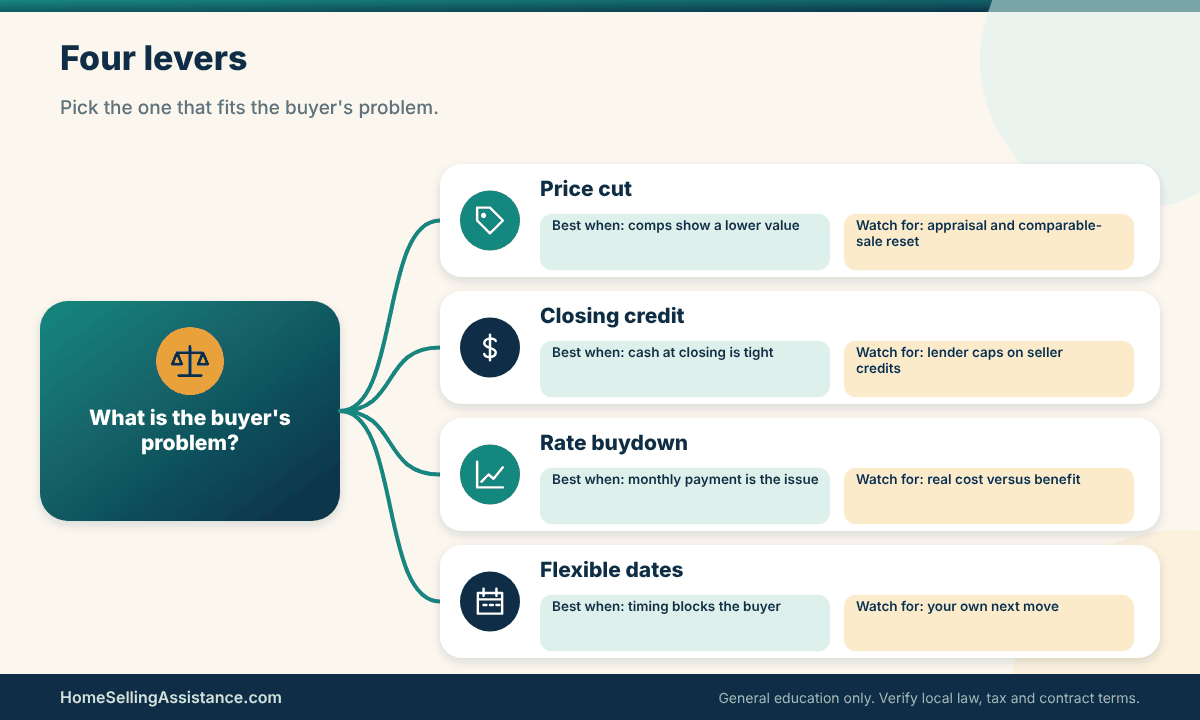
Sellers sometimes assume that, as mortgage rates impact home sellers, the only lever is the list price. It is not. Credits, flexible dates, repairs, marketing quality and even the way you respond to offers all change what a buyer experiences. Understanding how mortgage rates impact home sellers is partly about recognizing which of those levers fits the particular pressure your buyers face.
A good rule is to match the lever to the problem. If buyers like the house but balk at the payment, financing help may fit. If buyers say the price is simply above what comparable homes sold for, a price change fits. If buyers love the price but cannot move on your timeline, flexible dates fit. Seeing how mortgage rates impact home sellers in practice means diagnosing the problem before choosing the fix.
Practical implications: price, concessions and terms
Where mortgage rates impact home sellers through buyer payments, think of the buyer’s problem as having two parts: the price they pay and the cost of financing it. You control the first directly and the second only indirectly. When rates make financing costly, you can respond by lowering the price, by helping with financing costs, by easing other terms, or by changing nothing and waiting for a buyer for whom the numbers work. Each choice has a different cost to you.
A price reduction lowers the loan size permanently for whoever buys, and it also resets the comparable-sale picture for your neighborhood. A concession, which is a credit toward the buyer’s costs, helps with cash needed at closing and can sometimes fund a temporary or permanent rate reduction, but it does not change the recorded sale price and can be limited by the buyer’s loan program and lender. The right choice depends on the buyer, the appraisal risk and your own net.
Evidence to gather: what a concession can and cannot do
Seller concessions are covered in detail in our guide on seller concessions in a home sale, but the headline points matter here. A buyer’s lender may cap how much of a seller credit can count toward the buyer’s closing costs, and the cap often depends on the loan type and the buyer’s down payment. Ask the buyer’s lender, in writing, what limits apply to the specific loan before you agree to a number.
One common use of a credit is a rate buydown, where money is paid up front to lower the buyer’s interest rate for a period or for the life of the loan. Illustratively, a lender might charge a fee equal to one percent of a $300,000 loan, or $3,000, for a rate reduction that varies by lender and market. Whether that reduction is worth the cost to you is a calculation, not a rule, and the lender should supply the real figures.
Compare the credit against the alternative on your own net sheet. A $3,000 credit costs you $3,000. A price reduction of the same size costs you $3,000 too, but it may also affect appraisal comparables and your agent’s compensation if that is tied to price. Run both on your closing-cost estimate, using our walkthrough on calculating home sale net proceeds, to see which leaves you better positioned.
A scenario, an exception, and your next step: credit versus cut
Imagine a buyer who loves your house but is nervous about the monthly payment. They ask for a price cut. You could agree to lower the price, or you could offer a credit toward closing costs or a rate buydown of similar cost to you. For this buyer, a lower payment might matter more than a lower price, and a buydown can deliver that.
The exception is when the appraisal is a concern. If the appraised value comes in under the contract price, a price cut might actually help the deal survive, while a credit does nothing to close that gap. Our guide on the appraisal gap for sellers explains that risk. Your next step is to ask your agent which comparable sales an appraiser is likely to use and whether the price you are discussing is supportable.
Also consider the contract mechanics. A credit is usually written into the purchase agreement and shows up on the settlement statement, so it should be reviewed by whoever handles your closing. Sellers weighing how mortgage rates impact home sellers in their own sale should ask the title or escrow company, or an attorney where that is customary, to confirm that any credit is documented properly and permitted under the buyer’s loan terms.
What still requires local pricing or professional analysis
There is a ceiling on what any general article can tell you, and it is worth naming. A piece on how mortgage rates impact home sellers can explain mechanisms and give you questions to ask, but it cannot price your house, predict your sale date or tell you whether a specific concession is a good deal for you. Those answers depend on current local data, your loan payoff, your contract and your tax situation.
The professionals who can fill those gaps are different people. A local agent or appraiser can speak to comparable sales and pricing. A mortgage lender can quote rates and explain loan program limits for a particular buyer, and for your own next purchase. A tax professional or attorney can address how a sale affects you personally. Knowing which question belongs to which expert saves time and money.
Be wary of anyone who answers all of those questions at once with total confidence. A lender who also predicts your sale price, or an agent who also promises your tax outcome, is stepping outside their lane. Reliable advice about how mortgage rates impact home sellers comes in pieces, each from the person best placed to give it, and each carrying a date and a stated set of assumptions.
Before the second table, a short word on how to use it. Rather than predicting how mortgage rates impact home sellers, the sensitivity table asks “if this assumption changes, which way does the effect lean, what else could be responsible, and what do I check locally?” It is a thinking tool for conversations with your agent and lender.
| Assumption that changes | Expected effect | Confounder | What to verify locally |
|---|---|---|---|
| Rates rise for several weeks | Some stretching buyers pause or ask for help | Seasonal slowdown or low inventory | Weekly showings and pendings in your band |
| Rates fall for several weeks | More buyers qualify; some competition may return | New listings arriving at the same time | Pending-to-active ratio for comparable homes |
| Your price band is entry-level | Payment changes matter more to buyers | Down payment programs and local incentives | Financing types in recent comparable sales |
| Your price band is high-end | Payment changes matter less; cash is common | Stock markets, job moves, relocations | How many recent buyers used little or no financing |
| You offer a rate buydown credit | Lower buyer payment without a recorded price cut | Lender caps on seller credits | The buyer’s lender’s written credit limits |
| You are buying again | New loan at today’s rate; old rate is lost | Home price in your next market | A current lender quote for the next purchase |
Read the table row by row and replace the assumption with whatever is happening in your market this month. If the verify column gives you something you can obtain within a day or two, such as a lender quote or a short comparable-sales list, do that before making a pricing move. If it does not, you have identified an information gap, which is itself a useful finding.
Evidence to gather: your own move, not only the sale
Many sellers are also buyers, and for them mortgage rates impact home sellers twice over, so the question is not just whether a rate affects a buyer, but whether it affects the whole move. If you hold a mortgage with an older, lower rate and plan to buy another home, you may be giving up that rate and taking on a new loan at today’s rate. That is a real cost that deserves a number, even if the answer is that the move is still worth it for your family.
Ask a lender for a written estimate of the payment on the next purchase at the current rate, using several price points. Then compare it with your current payment. Our guide on whether to sell first or buy first walks through the sequencing choices, and the article on bridge loans for home sellers covers one short-term financing tool some owners consider, along with its costs and risks. Those articles do not decide for you; they give you the questions to ask.
If an older, low-rate loan makes moving expensive, some owners decide to stay, renovate or rent the home out instead. Those paths bring their own tax and legal questions, so a professional’s view is worthwhile before committing. The point is to see the real trade-off, so that a rate headline does not push you into or away from a move without a full comparison.
A scenario, an exception, and your next step: pricing the whole move
Imagine a couple selling a house with a low-rate loan and buying a larger home. They focus on getting a great sale price, then discover the payment on the next house is much higher than their current one. A better sale price helped, but it did not erase the higher rate on the new loan. They would have been better prepared if they had run the full comparison at the start.
The exception is when the move is driven by something other than money, such as a job, family health or a school need. Then the goal is not to avoid the higher payment but to understand it and plan for it. Your next step is to build a simple side-by-side: current payment and equity on one side, projected payment and cash needs on the other. Update it as quotes change.
A side-by-side like this also protects you from a quiet trap: a great sale price can feel like a win while the true cost of the move is hidden in the next loan. Being clear-eyed about how mortgage rates impact home sellers who are also buyers means counting both sides before you sign anything. If the payment on the next home is uncomfortable, a counselor from the HUD housing counselor directory can review your budget at little or no cost.

One more habit: when the rate environment shifts, a short routine keeps you steady. First, refresh your comparable sales so you know what buyers are actually paying now. Second, ask a lender what payment a typical buyer at your price would face, using current quotes. Third, compare a price change with a concession in writing, including what each does to your net. Fourth, review your timeline and whether waiting has a price of its own, such as carrying costs on a second home.
You can find more on how long homes tend to sit in our guide to days on market for sellers, and on whether your market favors buyers or sellers in our article on seller markets and buyer markets. Both help you interpret what you see. More general articles on this subject live in our market conditions and timing library.
Finally, remember that waiting is also a decision, even when mortgage rates impact home sellers in ways that feel urgent. A seller who holds off for rates to improve is betting on something nobody can reliably forecast, while a seller who prices to today’s market is acting on information that exists now. Neither path is automatically right. If you need a pricing method to anchor the choice, our guide on how to price a house to sell is a good place to begin.
Frequently asked questions about mortgage rates impact home sellers
How do mortgage rates impact home sellers in the simplest terms?
Rates change the monthly payment on a given loan, and the payment limits what many buyers can offer. When the payment rises, fewer buyers reach your price or they negotiate harder; when it falls, more can qualify. How strongly that shows up depends on your local market, your price band and the type of buyer your house attracts.
Should I wait for rates to drop before I list?
Nobody can reliably forecast rates, so waiting is a bet rather than a plan. A better question is whether you have a reason to move now, what carrying the house costs you each month and what your local data says about demand. If your timeline is flexible, waiting may be reasonable; if it is not, price to the market you can see today.
Does a rate change always mean I should cut my price?
No. A price cut is one lever among several. Credits toward closing costs, a rate buydown, flexible possession dates or better presentation can address the same buyer concern. Compare each against your net proceeds and against what recent comparable homes in your area actually did, and ask your agent for current local data before changing the list price.
What is a seller concession, and can it help with the way mortgage rates impact home sellers?
A seller concession is a credit you agree to give the buyer, usually applied to closing costs or to a rate buydown. It can ease a payment problem without lowering the recorded price. The buyer’s loan program and lender may cap how much credit is allowed, so get those limits in writing before you agree to an amount.
What is a rate buydown?
A buydown is an up-front payment that lowers the buyer’s interest rate, either for the first years of the loan or for its whole life, depending on how it is structured. The cost and the benefit vary by lender and by day. Ask the buyer’s lender for the actual price of the buydown and compare it with other uses of the same money.
Will lower rates bring me multiple offers?
They might, but there is no guarantee. Lower rates can bring more buyers into the market, yet more sellers may list at the same time, and your own price and condition still matter. Treat any pick-up in showings as something to watch for a few weeks, not as a promise of a bidding contest.
I have a low-rate mortgage. Does that change how I should think about selling?
It can. Selling usually means paying off that loan, and a replacement loan may carry a higher rate. That does not make moving a mistake, since many people move for life reasons, but the cost belongs in your plan. Ask a lender for a written payment estimate on the next home and compare it with your current payment.
Where can I find reliable rate and market data?
For rates, look for dated sources and written lender quotes. For the market, use national reports such as those from the National Association of Realtors for context, and rely on your local agent’s MLS data for your area. Always note the date, because yesterday’s number may not describe this week.
Can a high rate environment cause buyers to back out?
Sometimes, particularly if a buyer’s financing was not locked or their circumstances changed. That is one reason the financing contingency in your contract matters, and our guide to the financing contingency for sellers explains how it works. Ask for a pre-approval letter and a lender contact before you accept an offer, and read the contingency dates carefully.
Who should I ask about my specific situation?
Ask a local real estate agent or appraiser about pricing, a mortgage lender about rates and loan programs, and a tax professional or attorney about legal or tax effects. If you are worried about monthly payments on your own loan, the HUD-approved housing counselor directory can point you to free or low-cost counseling.
A steadier way to read the rate headlines
Seeing how mortgage rates impact home sellers clearly means holding two ideas together: rates matter because they shape what buyers can pay each month, and rates are not your whole story because your market, your price and your house do much of the work. Collect dated, local evidence, compare a price change with a credit on your own net sheet, and price your next purchase alongside the sale. This article offers general education, not legal, tax or financial advice, so confirm the specifics with a local agent, a lender and, where needed, a tax professional or attorney.