An earnest money seller is simply a home seller who has accepted an offer that comes with a good-faith deposit, and who now has to decide how much comfort that deposit really provides. The short answer is that it provides some comfort and a lot less certainty than most people assume.
When you read a purchase offer, the earnest money line is easy to treat as a score. A bigger number feels like a more serious buyer, a smaller number feels like a risk, and the rest of the paperwork fades into the background. Many sellers we talk to describe exactly this reflex, and it is understandable. Anyone new to earnest money seller decisions tends to start there. A deposit is the only part of an offer where the buyer visibly puts money on the table before closing.
Every earnest money seller eventually learns that the deposit is only one clause in a contract made of many clauses. Whether you can ever keep that money depends on contingencies, deadlines, who holds the funds, and what your state and your contract say about default. This guide walks through what the deposit tells you, what it does not, and how to fold it into a calm decision.
Think of this as a plain-language earnest money seller briefing, built to be read once and then used as a checklist.
It sits inside the wider framework we describe in how to evaluate a home offer, where price, financing, contingencies and timing are weighed together. Nothing here is legal advice. Rules differ by state and by contract form, so treat everything below as a way to ask better questions of your agent, attorney or title company.
Key takeaways
- The deposit signals seriousness, not ability. It shows a buyer is willing to risk something, but it says little about loan approval, appraisal results or the buyer’s reliability.
- Refundability depends on the contract. Whether you could ever keep the money turns on contingency language and deadlines, not on the dollar figure.
- The seller usually does not hold the funds. A title company, escrow agent or brokerage trust account typically does, and a written receipt is the proof you want.
- Disputes rarely end with a quick payout. Many contracts require both sides to sign a release, so an earnest money seller should plan for delay if a deal collapses.
- Compare deposits inside the whole offer. A modest deposit with firm terms can be stronger than a large one wrapped in open contingencies.
- Local custom and professional review matter. Customary amounts, forms and timelines vary widely, so verify them with a local agent, attorney or title officer.
What an earnest money deposit actually claims on a seller’s behalf
Before comparing numbers, it helps to be exact about what a deposit is claiming. In plain terms, the buyer is saying, “I am committed enough to this house that I am putting funds into a neutral account while we both work through the contract.” That is a statement about intent. It is not a statement about whether the buyer will be approved, whether the home will appraise, or whether the inspection will go smoothly.
This first section separates the claim from the evidence. An earnest money seller who understands that gap early tends to ask better questions when offers arrive, and tends to feel less whiplash if a deal wobbles later.
The claim behind the deposit: seriousness, not certainty
Earnest money is a good-faith deposit a buyer delivers after the contract is signed, usually within a short window the contract sets. It is normally credited toward the buyer’s cash needs at closing, so it is not an extra fee. If the sale closes, the money simply becomes part of the buyer’s payment. If the sale does not close, what happens next depends on why and on what the contract says.
That makes the deposit a form of skin in the game. The buyer has something to lose if they walk away in a way the contract does not allow. For you, that exposure is the real value of the clause, and it is worth noticing that it only exists to the extent the contract makes the money hard to get back.
Evidence to gather: the contract clause and the holder’s receipt
Start with the actual earnest money paragraph of the purchase agreement, not a summary of it. You are looking for four facts: the dollar amount, the deadline for delivery, the name of the party holding the funds, and the conditions under which the money is returned to the buyer or released to you. If any one of those four is blank or vague, ask your agent or attorney to clarify before you sign.
Then ask for the holder’s written receipt once the funds arrive, since an earnest money seller file without a receipt has a hole in it. A title company or escrow officer usually issues one, and a brokerage can give you a trust account confirmation. A verbal “it’s been deposited” is pleasant to hear, but a receipt with a date and amount is what you will want in your file if questions arise later.
It also helps to read the paragraph that sits next to the deposit clause. Many contracts place default and remedy language in a separate section, sometimes pages away. That section often says whether your remedy for a buyer default is limited to the deposit or whether other remedies remain open. Readers are often surprised to learn that a contract can treat the deposit as the full measure of what a seller may claim.
A scenario, an exception, and your next step for a thin deposit
Imagine an offer arrives with a deposit that looks small next to the price, for example a few thousand dollars on a sale in the mid six figures. These are illustrative round numbers, not a benchmark. A small deposit might mean the buyer is stretched, or it might simply reflect local custom where deposits are modest and the contract does the heavy lifting.
The exception is a buyer who offers a small deposit but pairs it with a short inspection window, a short financing window and strong proof of funds. That package can be more reassuring than a bigger deposit with long open periods. Your next step is to ask your agent what is typical locally, then compare the full set of terms rather than reacting to the deposit alone.
What data would back up an earnest money seller’s confidence
Good earnest money seller habits start with paperwork. Confidence should rest on documents you can read, not on a sense of the buyer’s personality. For a deposit, the supporting data is mostly procedural: a signed contract with the deposit terms filled in, a receipt from a neutral holder, and a calendar of the dates when the buyer’s protections expire. Together those tell you how real the commitment is at each stage.
Notice what is missing from that list. Nothing in the deposit paperwork confirms the buyer’s loan approval, savings beyond the deposit, or the house’s appraised value. Those answers live in other documents, which is why a sound earnest money seller routine pairs the deposit file with a lender letter or proof of funds, as discussed in proof of funds for cash buyers.
Evidence to gather: deposit deadline, holder and amount in writing
Three details deserve to be written down in one place, ideally on a single page you keep with the contract. First, the amount and whether it can be paid in installments or all at once. Second, the deadline, which many contracts express in days after the last signature rather than as a calendar date. Third, the holder’s contact details, including a direct phone number you can verify independently.
That last point matters more than it sounds. Real estate wire fraud often targets deposit instructions, because the amounts are meaningful and the timing is tight. If a message arrives changing where funds should go, pause and call the holder using a number from the contract or the holder’s own website. The FTC’s consumer guidance at consumer.ftc.gov is a good general reference on payment scams, and we cover the pattern in real estate wire fraud for sellers.
A scenario: the check that arrives on day four
Suppose the contract says the deposit is due within three days of acceptance, and the receipt shows it arrived on day four. Is that a problem? It might be, or it might not. Some contracts treat late delivery as a default the seller may act on, while others give a cure period or require written notice first. Do not assume either way.
The calm response is to message your agent the same day, ask what the contract says about late delivery, and decide whether to extend in writing or give notice. Informal tolerance can be read later as a waiver, so put any agreement on paper. This is the kind of detail where an earnest money seller benefits from a quick call to an attorney or an experienced agent.

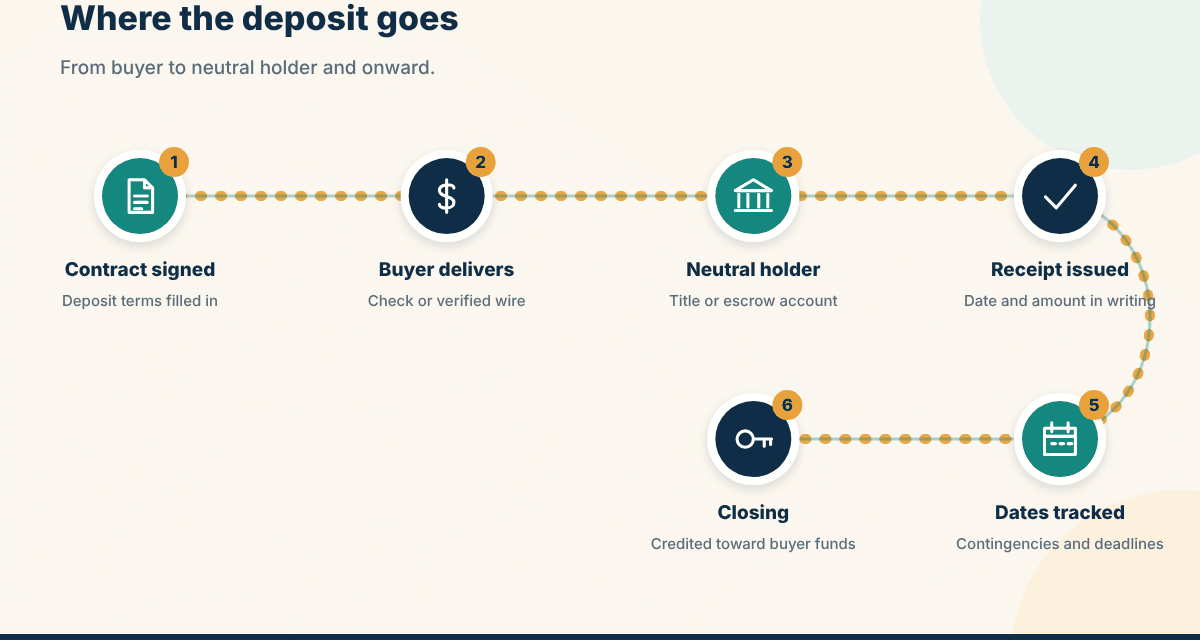
Figure 1 above shows the usual path a deposit takes, from the buyer through a neutral holder and, in most sales, back into the closing funds. Keep that picture in mind as we move to the harder question: how much meaning a deposit’s size really carries.
The table below lays out the main claims people make about deposits, the evidence that supports each one, and what each claim leaves out. Use it as a checklist when an offer arrives, and fill in the right-hand column with your own notes.
| Claim | Metric or source | What it supports | Limitation | Seller implication |
|---|---|---|---|---|
| “The buyer is serious” | Deposit amount in contract | Willingness to risk funds | Says nothing about loan or appraisal | Treat as one signal among several |
| “The money is safe” | Holder’s written receipt | Funds reached a neutral party | Receipt is not a release of funds to you | Keep the receipt in your file |
| “We can keep it if they leave” | Default and remedy clause | Possible seller remedy | Contingencies may entitle buyer to a refund | Read contingency dates first |
| “A bigger deposit is stronger” | Comparison across offers | Higher exposure for the buyer | Large deposits can sit behind open contingencies | Weigh against firmness of terms |
| “The buyer has the cash” | Lender letter or funds proof | Capacity beyond the deposit | Deposit alone does not prove it | Request the separate document |
| “Delivery was on time” | Receipt date versus contract date | Compliance with deadline | Late delivery rules differ by contract | Ask about cure terms in writing |
To use the matrix, go row by row, the way an earnest money seller would on a first read of an offer, and write one line in each cell about the specific contract in front of you. Where the limitation column describes a gap you cannot fill from the paperwork, that is your cue to ask a question. In the next section we look at how easy it is to read more into a deposit than the evidence allows.
Separating signal from false precision in a deposit
An earnest money seller sees the deposit as a single line, but it carries several meanings at once. Deposits invite false precision because they come as a single, tidy number. It is tempting to compute a percentage of the price, compare it with a rule of thumb you heard from a neighbor, and feel that you have measured something. In practice, there is no universal percentage that makes a deposit adequate. What counts as normal varies by state, by metro area, by price tier and even by season.
So the useful skill for any earnest money seller is not memorizing a benchmark. It is learning which conclusions a deposit supports and which it does not, then adding local context for the rest. That is the discipline every careful earnest money seller ends up practicing.
What the deposit amount can and cannot show
A deposit can show relative commitment between two offers in the same market, if everything else is similar. It can show that the buyer had liquid funds at the moment they wrote the check or sent the wire. It can show that the buyer’s agent and the buyer took the contract seriously enough to deliver on time. Those are modest but real signals, and they are worth noticing.
What it cannot show is just as important. It cannot show that the buyer’s lender will approve the file, that the home will appraise at the contract price, or that the buyer will not find a reason to cancel under a contingency. The amount is a number on a line; the protections around it decide whether it matters.
Evidence to gather: how the deposit compares with the rest of the offer
When you compare offers, put the deposit next to its neighbors in the contract. Look at the financing contingency length, the inspection window, the appraisal language, and any sale-of-buyer’s-home condition. A deposit that is easy for the buyer to recover through several open contingencies functions more like a loan to the escrow account than a pledge.
It helps to write the offers side by side on a sheet of paper, with one row per term. Our guide to highest offer versus best offer explains why the top price is not always the strongest package, and the deposit is one of the terms that deserves that same scrutiny. The goal is not to find a winner by arithmetic, but to see the trade-offs clearly.
Another useful comparison is the deposit against the buyer’s likely cash needs. If the buyer is paying a down payment and closing costs, the deposit is typically credited toward that amount. A deposit that is large relative to the buyer’s total cash needs says something different than one that is a small slice. You cannot see those totals, but a lender letter or proof of funds can sketch them.
A scenario: the large deposit with a soft contingency
Picture two offers at the same price. Offer A includes a large deposit but also a long financing contingency and an open appraisal condition. Offer B includes a smaller deposit, a short financing window, a pre-approval letter from a lender you can verify, and an appraisal-gap provision. The numbers here are illustrative, not typical.
On first glance, Offer A feels safer because of the bigger deposit. Looking closer, the buyer in A could walk away for several reasons and receive the deposit back. The buyer in B has accepted more risk of losing the deposit sooner. Many sellers would find B steadier, though your own priorities, timing and local norms could point the other way. Ask your agent to explain both in plain terms before you decide.
Local and property-specific confounders for an earnest money seller
Several outside factors can distort how an earnest money seller reads a deposit. Local custom is the biggest. In some areas, deposits are customarily modest and the contract does most of the work. In others, buyers in competitive conditions put down sizable deposits to stand out. Reading a deposit without that context is like reading a temperature without knowing whether the scale is Celsius or Fahrenheit.
Property type matters too. A condominium, a manufactured home, a new build, a short sale and an estate sale can each come with different forms, deadlines and deposit conventions. Even the type of buyer changes the picture. An investor paying cash, a first-time buyer using a low-down-payment loan, and an out-of-state relocator may all offer very different deposits for perfectly reasonable reasons.
Evidence to gather: local custom and contract forms
An earnest money seller can start by asking the listing agent, or a couple of agents if you are selling without one, what deposits have looked like on recent comparable contracts nearby, and how long buyers typically take to deliver them. Ask whether your area uses a standardized state or local association form, and whether that form has a default remedy built in. These answers come from experience and from the actual forms, not from national averages.
If you are working without an agent, a title company or real estate attorney can often explain customary practice and the form language. Your state real estate commission’s website may also publish consumer guides and sample forms. If you want a broader view of how deposits fit into negotiation, our hub on offers and negotiation collects related guides.
A scenario: the same deposit in two very different markets
Consider the same deposit dollar figure arriving on two different listings. In a fast, competitive area it could read as unremarkable or even low, because rival buyers are posting larger amounts. In a slower area, the same figure might look generous. Neither reading is wrong. They simply reflect different baselines.
This is why universal percentages mislead every earnest money seller who leans on them. A seller who relied on a number from a different market could reject a solid offer or accept a weak one. Your next step is to anchor to local evidence: recent contracts, your agent’s read of current buyer behavior, and the specific terms attached to this deposit. Treat any national figure you see as background, not a verdict.
Be careful, too, with stories about what other sellers did. A friend may tell you they kept a deposit after a buyer left, and that may be entirely true for their contract in their state. It tells you very little about yours. An earnest money seller is better served by the paragraph in front of them than by anecdotes, however sincere.
The same goes for online calculators and quick rules of thumb. A rule of thumb can describe a common pattern, but it cannot read your contract. If a rule sounds precise, ask where it came from, which market it describes, and how recent it is. If nobody can answer, treat it as conversation rather than evidence.
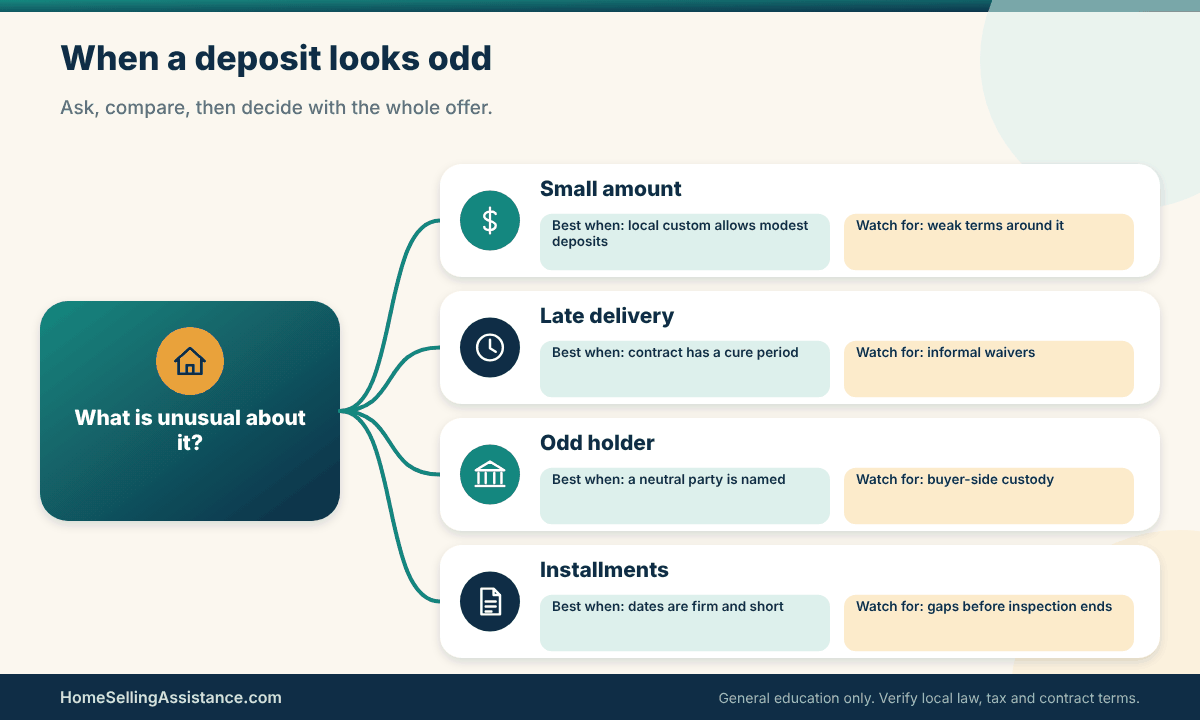
Figure 2 illustrates the fork you face when a deposit looks unusual, whether higher, lower or oddly structured. The next table turns that same idea into a sensitivity check. It shows how common assumptions about a deposit change when local or property conditions change, and what to verify before you lean on any of them.
| Assumption | Expected effect | Confounder | What to verify locally |
|---|---|---|---|
| Larger deposit signals a stronger buyer | Higher exposure if buyer defaults | Open contingencies may make it refundable | Contingency dates and refund language |
| Small deposit signals a weak buyer | Less to lose by walking away | Local custom may favor small deposits | Typical amounts on recent nearby contracts |
| Fast delivery signals reliability | Buyer appears organized and funded | Wire delays and holiday closures vary | Holder’s receipt and deadline wording |
| Investor deposits mirror owner-occupant ones | Possibly larger or more flexible | Investors may assign or restructure deals | Assignment clause and proof of funds |
| New build or condo deposits work the same | Similar role in the contract | Extra disclosures and approval periods | Form used and any association timeline |
| Deposit protects you in any default | Possible remedy after buyer breach | Remedy may be limited by contract or state | Default clause, attorney or title review |
To use this table, remember that a careful earnest money seller names the assumption first and then tests it. Take the assumption you find yourself making about a particular offer and read across. If the confounder in the third column applies to your situation, do the verification in the fourth column before you let the assumption shape your choice. It is a quick way to catch yourself leaning on a hunch.
Notice also what the table does not claim. It does not rank the assumptions or give a probability, because no honest universal figure exists. The point is to prompt the right questions with the right local professional, which is exactly what we turn to when we move from evidence to a decision.
Turning earnest money evidence into a seller decision
Evidence is only useful if it changes what you do. By this point you know what the deposit claims, what supports it, and where it can mislead. The remaining job is to translate that into a choice among offers, a plan for the weeks under contract, and a response if something goes wrong.
The approach below is deliberately practical, and every earnest money seller can adapt it to a different contract. It does not tell you which offer to take, because that depends on your timeline, your equity, your next move and your tolerance for risk. It shows how an earnest money seller can keep the deposit in proportion and avoid the two common errors: overvaluing it, and ignoring it.
The practical implication: weigh the deposit with the whole offer
For an earnest money seller, the deposit works best as a tiebreaker and a diagnostic, rather than as the lead factor. When two offers are close on price and terms, a firmer deposit structure can tip the balance. When an offer has an unusual deposit, whether very small, very late or oddly held, that oddity is a diagnostic. It invites questions about the buyer’s situation, the agent’s practices, or the form being used.
It is also worth remembering that the deposit interacts with other pieces of the deal. A buyer who is paying with a loan faces an appraisal and underwriting process that the deposit does not control, a topic we cover in the financing contingency from a seller’s view. A buyer with an inspection period can often cancel and recover the deposit, which links to how the inspection contingency works for sellers.
Evidence to gather: contingency dates and release language
Build a one-page calendar from the contract. List each date on which a buyer protection ends: inspection, financing, appraisal, any sale-of-home condition, and the closing date itself. Next to each date, write what happens to the deposit if the buyer cancels before that date and what happens if they cancel after it. The contract usually answers both, though sometimes in separate sections.
Then read the release language. Many contracts say that the holder will not pay out the deposit without written instructions signed by both parties, or without a court order or similar process. That detail shapes how you plan. If a deal ends in disagreement, the money may sit in the account for some time, so do not count it in your budget for your next purchase.
This calendar also doubles as a communication tool. Share the dates with your agent and, where appropriate, with your closing professional, so everybody is working from the same set of deadlines. Missed dates, in either direction, are a common source of avoidable disputes, and a shared calendar reduces that friction without costing anything.
A scenario: choosing between two offers with different deposits
You receive two offers a day apart. One has a larger deposit, delivered quickly, but a long window for the buyer to sell their current home. The other has a more modest deposit, delivered on the contract deadline, no home-sale condition, and a short financing period supported by a lender letter. All numbers here are hypothetical.
The first offer looks generous but hands the buyer an exit tied to events outside your control. The second looks lighter on the deposit line yet gives you earlier clarity. A seller who needs a firm date for a move may favor the second. A seller with no rush and a strong preference for price may weigh differently. Our discussion of handling multiple offers covers the process side of that choice.

Figure 3 shows how a deposit moves through a typical sale from the buyer’s wire or check to the final closing statement. It is a simplified picture, but it makes one point clearly: the money is committed at the start, adjusted by the contract’s terms along the way, and settled at closing or by agreement afterward.
A few habits keep an earnest money seller grounded during the weeks under contract. Check the calendar every Monday. Reply to buyer-side questions in writing, even when a phone call came first. Avoid promising anything about the deposit in casual conversation, such as saying you will “of course” return it, because offhand remarks can be quoted back to you later. Courteous, written, and dated is a good rule.
It also helps to decide in advance what you would do in the three most common situations: a late deposit, a request to extend a deadline, and a request to cancel. If your answer for each is “call my agent or attorney and check the contract first,” that is a perfectly sound plan. Having it ready simply keeps you from improvising under pressure.
How an earnest money seller handles a deposit dispute
Most sales close without any argument about the deposit, and an earnest money seller who has prepared will usually feel the difference only if something goes wrong. When a deal does end early, though, the question of who gets the money can become the sharpest point of friction. Buyers believe they were entitled to cancel. Sellers believe the buyer missed a deadline. The holder, caught in the middle, usually will not choose a side.
Preparing for that possibility is cheap for any earnest money seller, and it consists mostly of keeping good records and acting in writing. It does not require a pessimistic outlook, any more than keeping a fire extinguisher does. A calm, documented approach also tends to resolve disagreements faster, because it leaves less room for competing recollections.
Evidence to gather: written notices and the mutual release
An earnest money seller who keeps every written notice in one folder is rarely caught short. Include these: the buyer’s cancellation, any extension requests, your own notices of default or reminders, and the holder’s confirmations. Note the date and the method of delivery, because many contracts specify how notices must be sent, such as by email to named addresses or through a platform. A notice sent the wrong way can be argued later to be no notice at all.
If both sides agree on where the money should go, the usual tool is a mutual release, a short document each party signs authorizing the holder to pay the deposit as agreed. Your agent or the holder can often supply a form. If the sides disagree, options vary by state and contract, and may include mediation, arbitration or court. A real estate attorney is the right person to explain which applies to you.
One more caution. Do not tell the holder to release funds on your own say-so unless the contract clearly allows it, and do not accept a partial release without reading what you are giving up. Some releases include broad language that ends all claims between the parties. That may be fine if you intend it, but it should be a choice, not a surprise.
A scenario: the buyer walks away and asks for the money back
Suppose a buyer cancels after the inspection window has closed and requests the deposit back, citing a concern about the home’s condition. Maybe they are right, because the contract allowed it through a separate provision. Maybe they are not, because the deadline passed. You cannot tell from the story alone, and neither can your friends.
The steady response is to read the contract’s timeline and default language with your agent or attorney, respond to the buyer in writing in a neutral tone, and avoid threats. If you decide to pursue a release or a negotiated split, keep it documented. If the deal is truly dead, our guides on deals that fall through after inspection and financing that falls through cover the next moves, including relisting. Any remedy you might claim depends on your contract and state law.
No earnest money seller guide can replace the people who know your county’s habits, your state’s forms and your specific contract. The deposit is a good example of a topic where general education gets you most of the way to asking sensible questions, and local professionals take you the rest of the way to answers.
It is worth knowing in advance which questions belong to whom. A listing agent can speak to current buyer behavior and typical deposits. A title or escrow officer can speak to how funds are received, held and released. A real estate attorney can speak to what your contract and state law mean in a dispute. Pointing each question to the right person saves time and money.
What an earnest money seller still needs from a local agent, attorney or title officer
Four categories of question deserve local input from an earnest money seller. First, customary deposit size and timing, which depends on your market and price range. Second, the exact meaning of default, cure and remedy clauses, which depends on the form and on state law. Third, the mechanics of holding and releasing funds, which depends on the holder and on local practice. Fourth, anything unusual, such as assignments, installment deposits or non-standard forms.
None of these is exotic, and good professionals field them every week. What matters is asking early, before an offer is accepted, so that the answer can shape your decision rather than explain it afterward. If you are not using an agent, a short consultation with an attorney before accepting can be worth the fee.
Evidence to gather: questions to put to your closing professional
Here are questions that tend to produce useful answers. Who will hold the deposit, and how will I be notified when it arrives? What does your office require to release funds if the buyer and I agree? What happens if we disagree, and how long might the funds sit? How are wires verified, and how will you confirm any change in instructions? Are there fees tied to holding the deposit, and who pays them?
Write the answers down, with the name of the person who gave them and the date. If something sounds different from what the contract says, ask for clarification in writing. The contract usually controls, but a mismatch is a sign that someone has misunderstood the arrangement. Understanding the closing process also helps you read the final paperwork, as explained in how to read a seller closing statement.
A scenario: unusual deposit terms in an unusual deal
Imagine an offer in which the buyer proposes to pay the deposit in two installments, with the second due after the inspection period, and asks that the deposit be held by the buyer’s own attorney. This might be perfectly workable, or it might create gaps you do not want. The details matter, and the structure is outside the common pattern.
Your next step is to slow down, ask your agent and a closing professional what they think about the structure, and consider proposing a counter that uses a neutral holder and a single deadline. Neither choice is automatically right. The aim is to make the arrangement as clear as possible for both sides, a theme we explore from the negotiating side in counteroffer strategy for sellers.
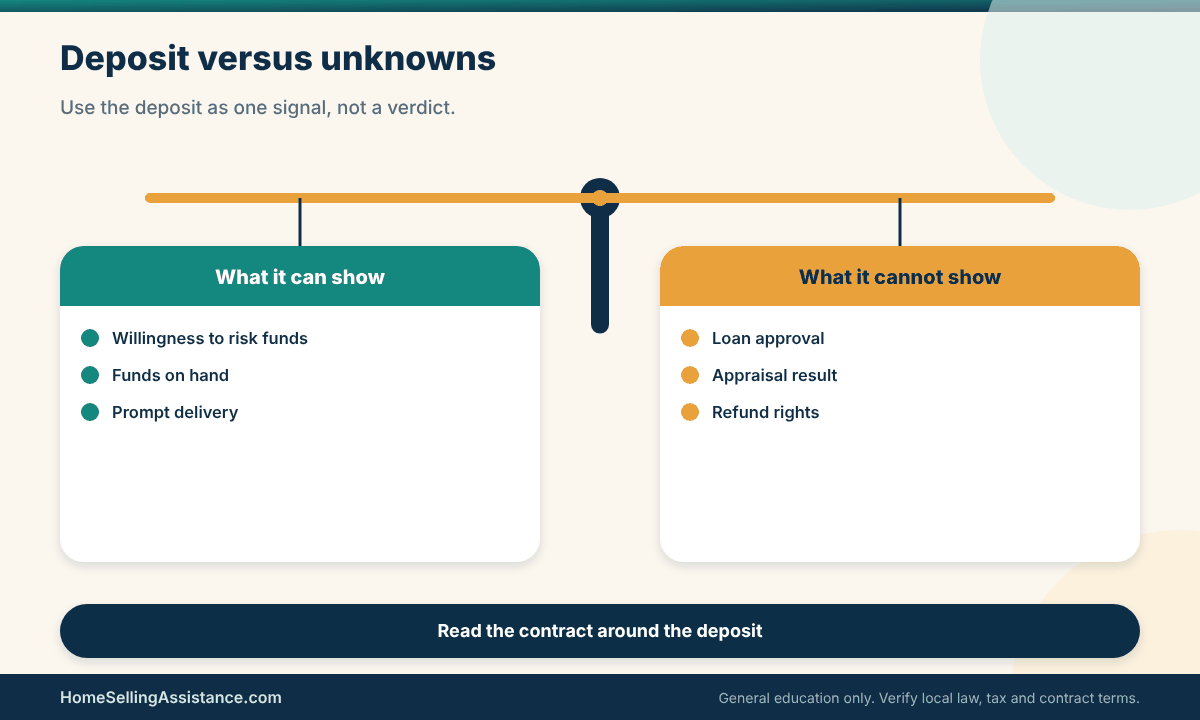
Figure 4 sketches the questions to ask professionals at each stage, from before you accept an offer through closing. Treat it as a prompt for conversations, not as advice about your own deal. The last section of the article puts it into a short routine you can run for any accepted offer.
A short earnest money seller checklist before you accept
The earnest money seller checklist below is intentionally brief. Checklists work because they free your attention for judgment. The one below is short on purpose. It is meant to be run once when an offer arrives and once again after you sign, and it works for sellers using an agent, an attorney, or neither.
Think of it as housekeeping for your earnest money seller file. None of the steps is difficult. Together, they take the guesswork out of a part of the sale where small misunderstandings tend to create large headaches, and they give you something concrete to show a professional if questions arise.
Evidence to gather: documents for your own file
Keep a folder, paper or digital, with the signed contract and any addenda, the holder’s contact details verified by a second source, the deposit receipt, the contingency calendar, and every written notice. Add a note recording who you spoke to and what they said about deposit handling. If your state or local forms include a deposit receipt or disclosure, include that as well.
Also keep a copy of any proof of funds or lender letter you received, since it supports the picture the deposit only partly paints. If the sale closes smoothly, you will never need most of this. If it does not, a tidy file lets your professional help you quickly. For a wider view of the contract itself, see the real estate sales contract from a seller’s side.
A scenario and your next step: keeping the deposit on a calendar
Suppose you accept an offer on a Friday. By Monday morning, you want three things on your calendar: the deposit due date, the date each buyer protection ends, and a reminder to ask for the holder’s receipt. If the deposit is late, you want to know on day one, not day ten, so that the choice to extend or give notice is yours.
That small routine, repeated on every deal, is what separates a prepared earnest money seller from a surprised one. It turns a vague worry into a set of dates. If something slips, you call your agent or attorney with the dates and the contract in hand, and the conversation is productive within minutes. Add an optional check-in with the holder a few days before the key deadlines, and you will rarely be surprised.
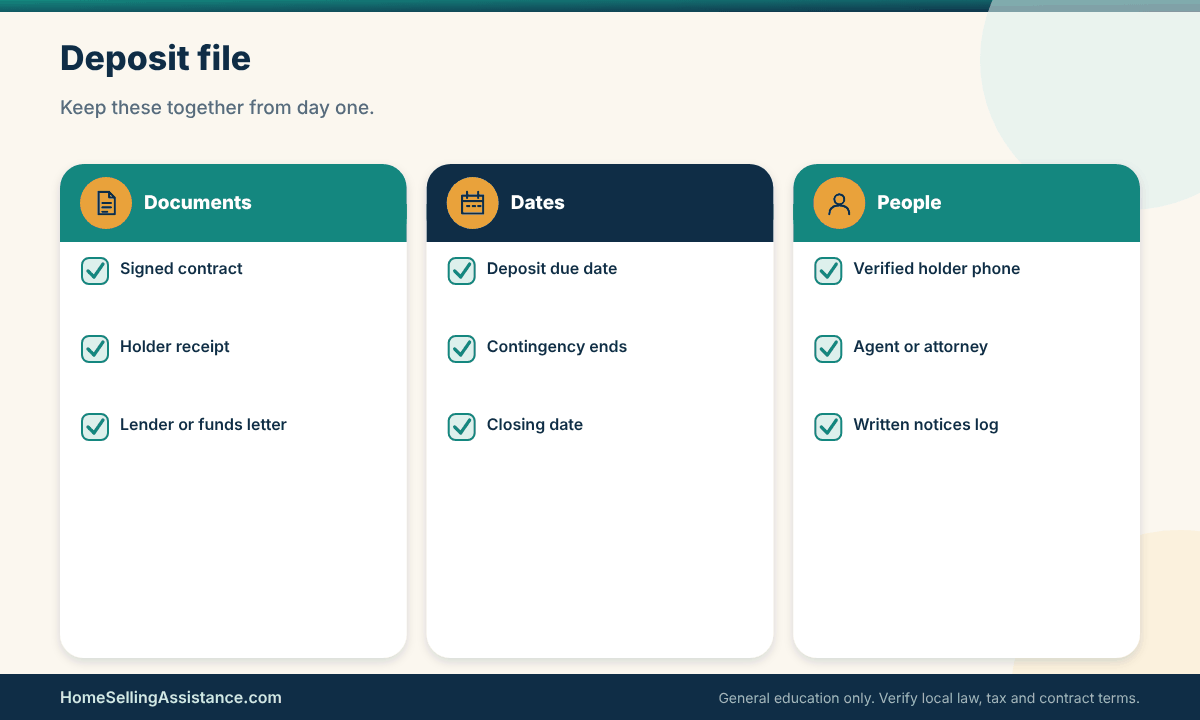
Figure 5 gathers the checklist into one picture you can save or print. It covers the documents, the dates and the people involved, so that you can see at a glance whether anything is missing before you move to the next stage of the sale.
Finally, remember that the person on the other side of the deal is also working from a contract and a set of worries. Buyers often feel exposed when they hand over a deposit, and a friendly, prompt response from the seller’s side usually keeps the sale on track. An earnest money seller who communicates clearly, keeps dates visible and stays courteous tends to see fewer misunderstandings turn into disputes.
Quick scenario
A seller accepts an offer with a modest deposit and a firm, short set of contingency dates. The buyer’s lender letter is verifiable, and the title company confirms the deposit on day two. When the appraisal comes in light, the seller and buyer renegotiate, because the buyer would otherwise lose the deposit if they walked after the contingency expired. These are illustrative events, not predictions, but they show how firm terms give a deposit its practical weight.
Frequently asked questions about earnest money seller topics
Does the seller hold the earnest money?
Usually not. Most contracts name a neutral holder, such as a title company, escrow agent or a brokerage trust account, to hold the funds until closing or until the parties agree on a release. Some regions have different customs, so check the contract’s deposit paragraph. If you are unsure who the holder is, ask your agent or attorney before the deposit is due.
Can an earnest money seller automatically keep the deposit if the buyer backs out?
No. Whether you can keep it depends on why the buyer cancelled and what the contract says. If the buyer cancels under a valid contingency, the contract often requires the deposit to be returned. If the buyer defaults after protections expire, you may have a claim, but the release usually still needs agreement or a formal process.
How much earnest money is normal?
There is no universal figure. Customary deposits vary by state, market, price level and even the season, and a number that is routine in one area can look unusual in another. Ask a local agent what recent contracts nearby have shown, and read the deposit alongside the other terms rather than on its own.
Is a bigger deposit always better for an earnest money seller?
Not necessarily. A large deposit that sits behind several open contingencies may be easy for the buyer to recover, while a smaller deposit with short, firm deadlines can be more meaningful. The deposit is one signal. Compare the contingency dates, the financing evidence and the closing timeline alongside it.
What if the buyer delivers the deposit late?
Check what the contract says about late delivery, since some contracts allow a cure period or require written notice before you can act. Do not rely on informal understandings. If you agree to extend, put the new date in writing, and tell your agent or attorney right away so that your position is protected.
How long does an earnest money seller wait for release after a failed deal?
It varies. If both parties sign a release promptly, the holder may pay out within days. If there is a disagreement, the money may stay with the holder until the parties agree or a court or arbitration process decides. Plan your finances as though the deposit might be unavailable for a while.
Does earnest money prove the buyer can get a loan?
No. The deposit shows the buyer had funds on hand, not that a lender will approve the mortgage. For that, look at a pre-approval or underwriting status letter from a lender you can verify, and keep in mind that approval can change before closing. Our guide on cash offers versus financed offers compares the two paths.
Could a deposit be part of a scam?
Yes, and wire fraud aimed at deposits and closing funds is a recognized problem. Verify wiring instructions by phone using a number from the contract or the holder’s own site, and be wary of last-minute changes sent by email. The FBI’s Internet Crime Complaint Center accepts reports, and the CFPB offers general consumer guidance.
Should an earnest money seller ask for a larger deposit in a counteroffer?
You can, and it is a common negotiating point. Keep in mind that a buyer may respond by asking for something in return, such as a longer window. Think about whether a bigger deposit actually improves your protection, given the contingencies in place, before you spend negotiating energy on it.
Does an earnest money seller need an attorney?
Not always, but it can be wise if the deposit terms are unusual, the contract is not a standard form, or a dispute arises. Some states routinely involve attorneys in closings, and others rarely do. A short consultation costs little compared with a misread default clause.
A calm way to carry this forward
An earnest money seller does best by treating the deposit as one honest signal and then reading the contract around it. Gather the receipt, build the date calendar, verify the holder, and ask local professionals the questions in this guide. For the bigger picture, return to the full offer evaluation framework and the contingencies and inspections hub. This article is general education, not legal, tax or financial advice, so confirm specifics with a qualified professional in your state.